NC State & UT Horticulture collaborate with Ashe County Extension on 2019 Pumpkin Variety Trials
(Updated: Feb. 20, 2024, 11:52 a.m.)
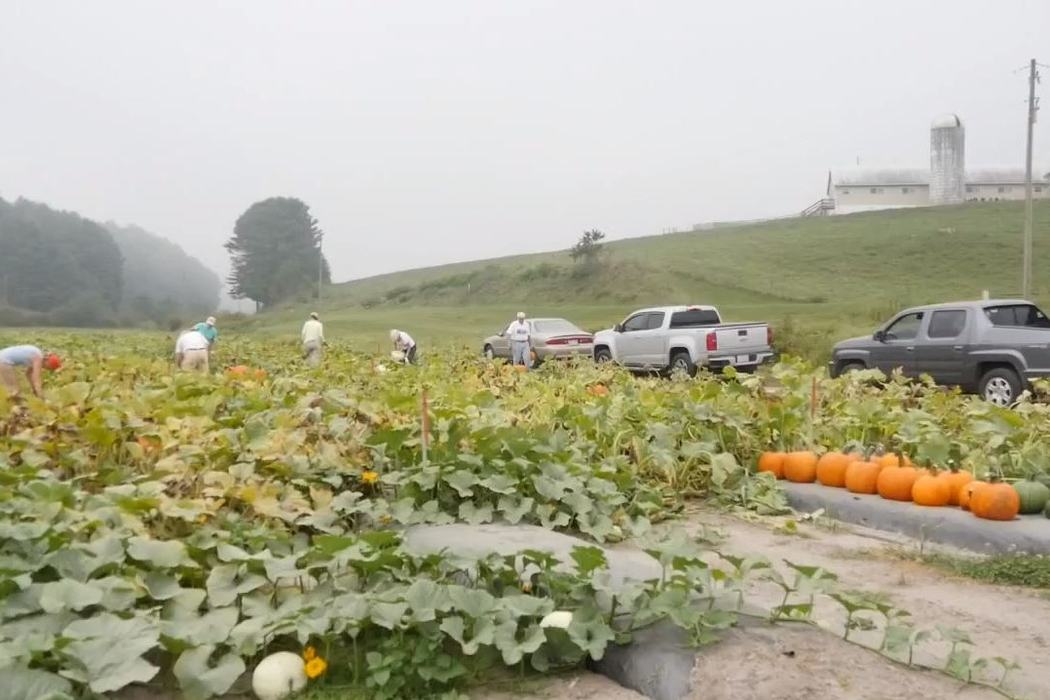
Collaborators on the 2019 Pumpkin Cuiltigen Variety Trials include NC State University Horticultural Science Vegetable Extension and Post Harvest Physiology Researchers, University of Tennessee Vegetable Extension, N.C. Cooperative Extension, Ashe County Center, and the Upper Mountain Research Station staff. Pumpkin cultigen evaluation studies have been conducted jointly by North Carolina State University and the University of Tennessee for over a decade. In order to conduct the pumpkin variety trials in an area of extensive pumpkin production, the 2018 and 2019 trials were moved to the Upper Mountain Research Station in Laurel Springs, NC after being conducted at the Mountain Research Station at Waynesville, NC in previous years.
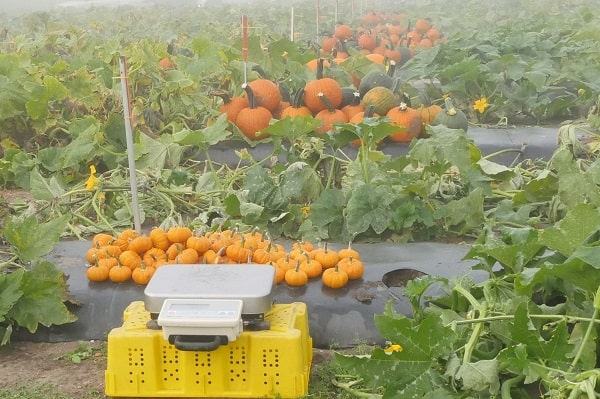
Agent Travis Birdsell, NC State Horticultural Science Vegetable Extension Specialist Jonathan Schultheis, UT Extension Institute Commercial Vegetable Extension Specialist Annette L. Wszelaki, and NC State University Horticultural Science Research Associate Keith Starke conducted variety trials on Pumpkin and other cucurbits in the NC mountains. They were joined by research station staff, Master Gardeners, and seed company representatives for an early September crop evaluation and harvest.
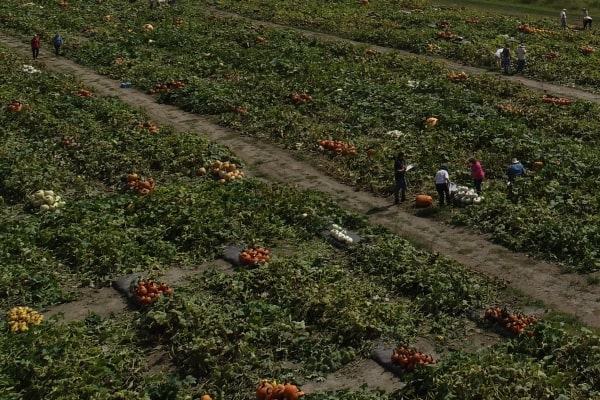
Over 50 varieties of pumpkin and gourds were mainly evaluated for yield and size. Each entry was also rated for shape, color, suturing, vine habit, handling characteristics, fruit size measurements and powdery mildew symptoms. An objective of the cucurbit evaluations is to identify adapted cultivars that producers can grow profitably. Visit the Cucurbit Variety Trials page to view Pumpkin Cultivar Evaluations from previous years.
Plants for Human Health Lab Studies Post Harvest Storage of Pumpkins
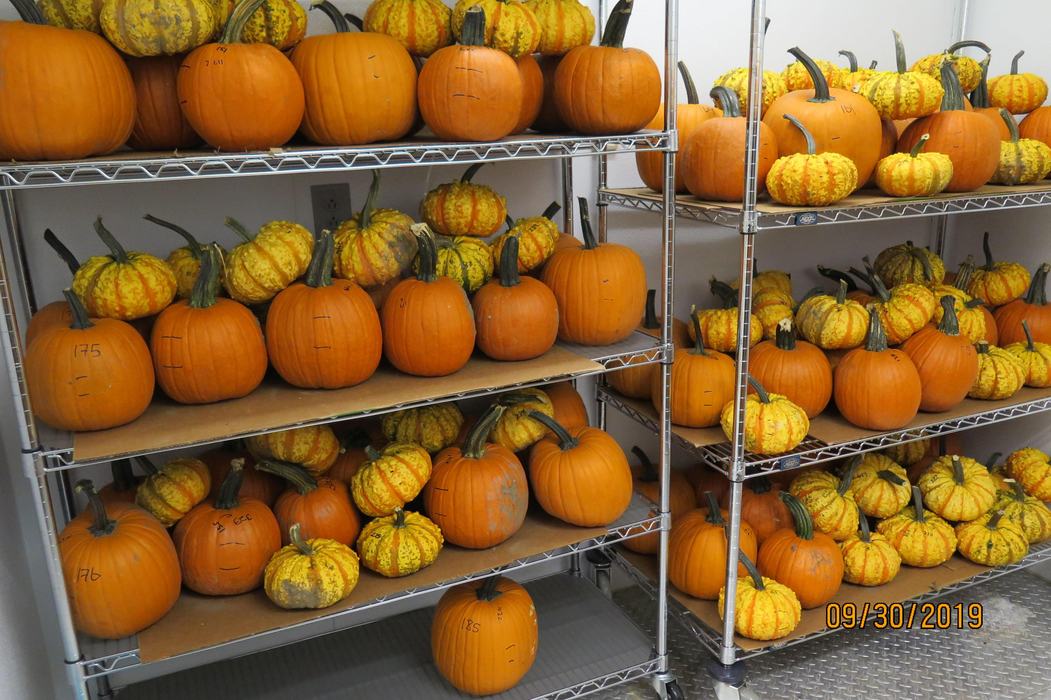
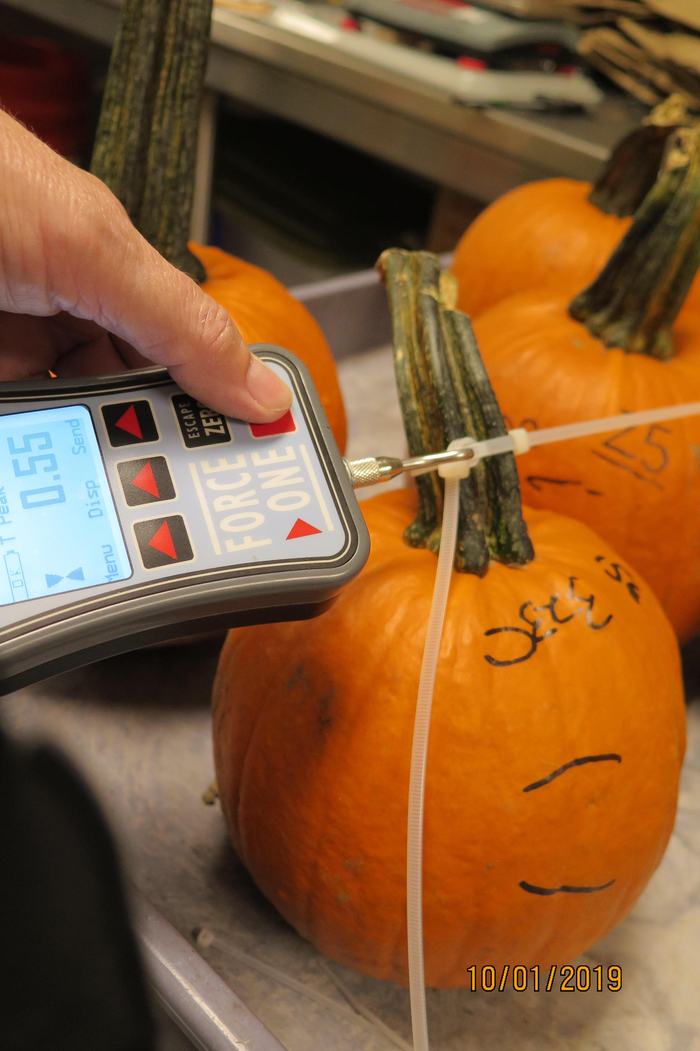
How much force is needed to remove a healthy pumpkin stem? Scientists studying the post-harvest physiology of pumpkins investigated this and other questions with several varieties of these cucurbits grown in the 2019 Pumpkin variety trials at the Upper Mountain Research Station in Laurel Springs, NC. This study was done to follow pumpkin quality (decay, stem retention, rind color change, weight loss) relative to sprays with copper sulfate and 0.9% sodium hypochlorite. Pumpkins of 'Warty Gnome', 'HiJinks' and 'Bisbee Gold' were stored at 58 F and 60% RH for 6 weeks. Weight loss was determined weekly, color change in rind every two weeks, and stem removal force at weeks 0, 3, and 6. Relative stem dimensions (length, base diameter, and diameter halfway up stem) were determined at weeks 0, 3, and 6. Dry weights of removed stems are taken to determine just how much weight loss happens in the stem. The leaders of the study are Drs. Jonathan Schultheis and Penelope Perkins-Veazie, and Travis Birdsell. Postharvest changes are being measured by Marlee Trandel, Joyce Edwards, and Erin Deaton. FYI the amount of force needed to remove a (healthy) pumpkin stem is 35-59 lbs!
For more information from the postharvest physiology lab, view the NC State Extension Homegrown video, "Getting to Know Gourds".